Safeguard Security Services

Event Security Guard Services

Hire event security guards for your event today. Easy hiring, quick pricing, and coverage built around your needs.

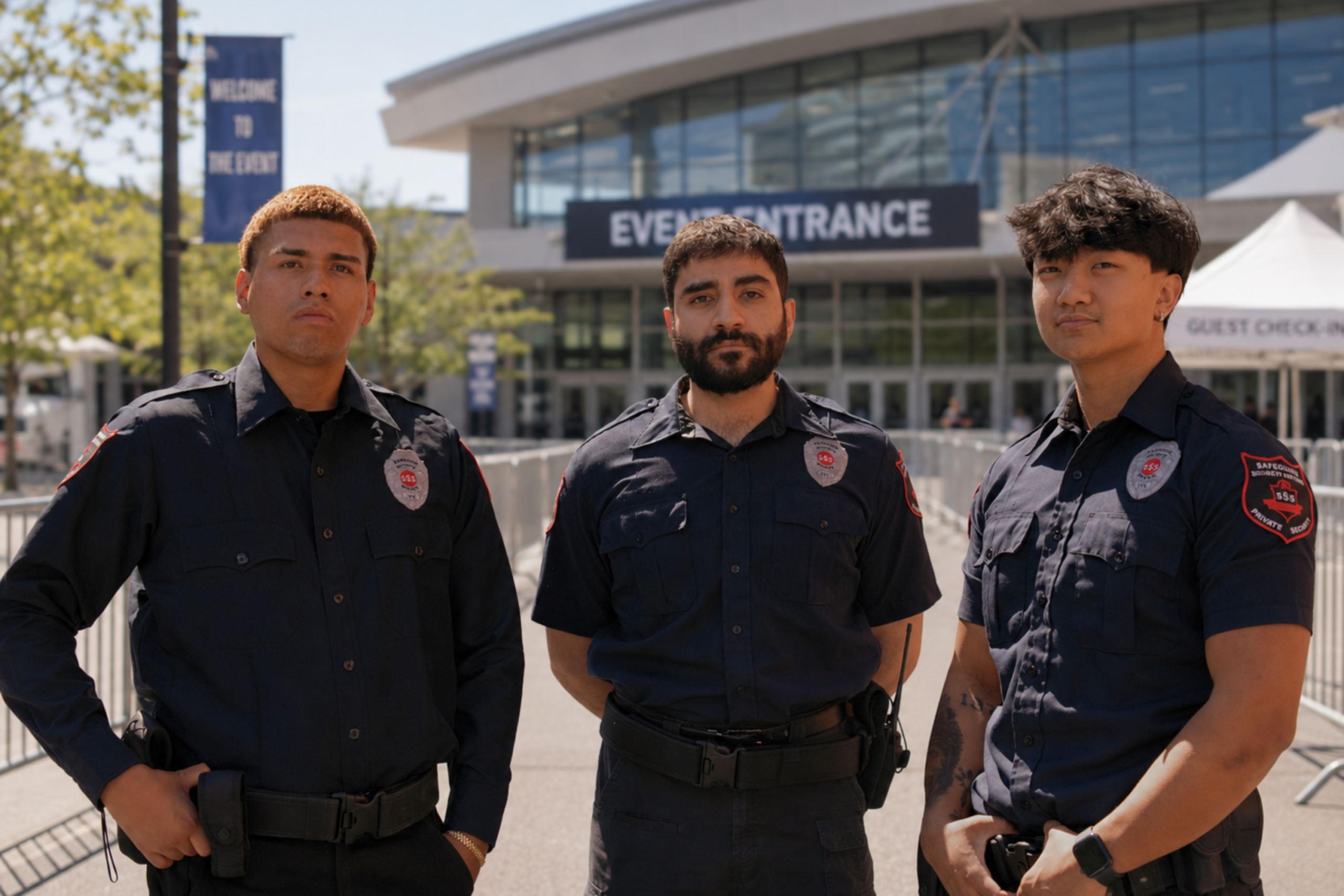
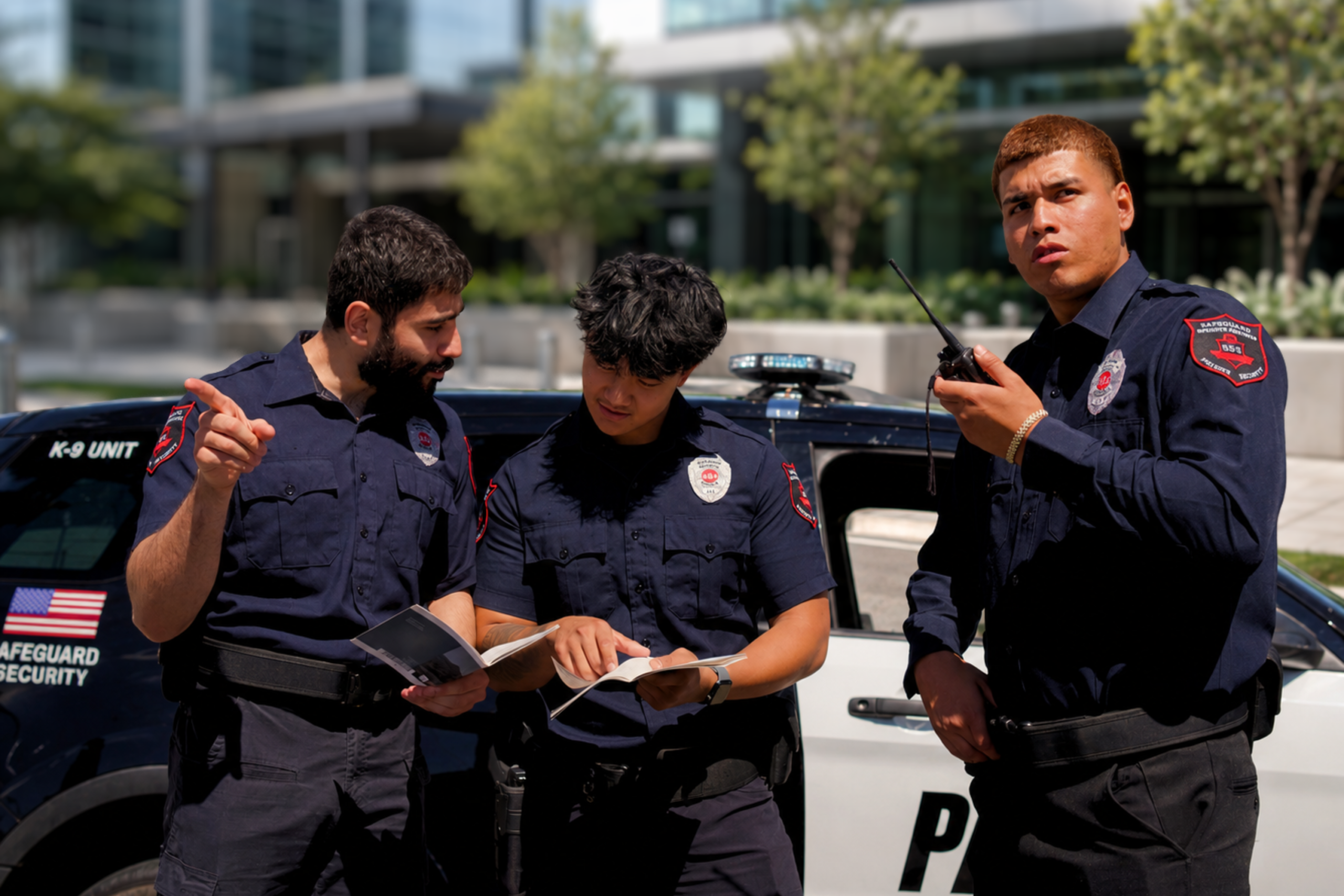
Security guard checking identification at a building access point

Trained Guards

30-day Trial

24/7 Coverage

BSIS Certified

Digitalized Reporting

Event Security Guard Services

Safeguard provides event security guard services for concerts, festivals, corporate functions, weddings, pop-ups, and private gatherings, and we’ve seen what happens when clients choose the wrong security provider. The guard shows up late, doesn’t know the venue layout, and spends the night staring at a phone. If you already know your event needs security, the hard part is done. You just have to figure out which provider to choose, and we will help you with that.


This page is built to help you compare different providers and choose the right one. We’ll walk through what to look for when reviewing proposals, what event security guards actually do during a live event, and what working with a provider should look like. If you’re weighing your options right now, the framework here goes well beyond price.

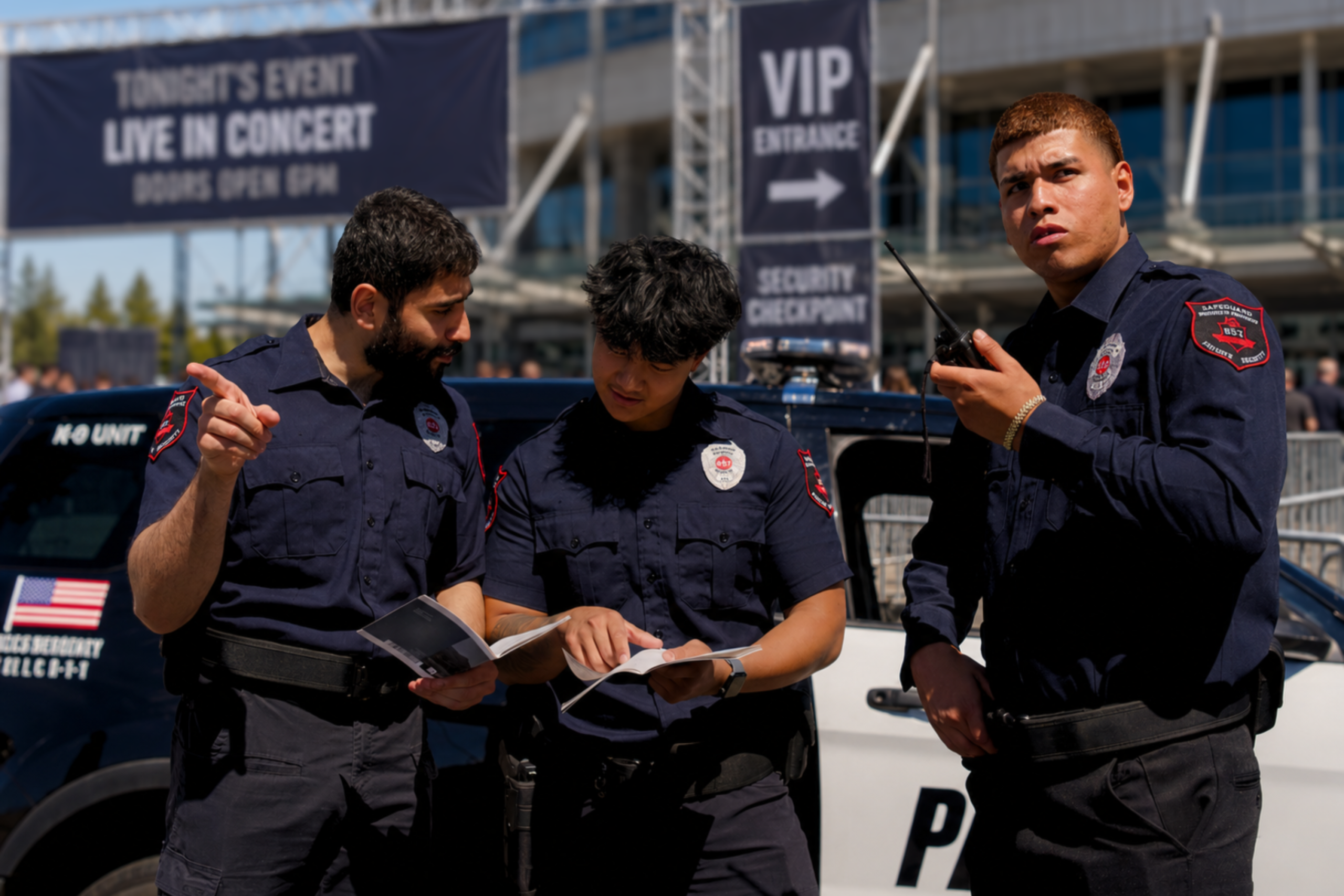
Two unarmed security guards walking together on patrol

How to Evaluate and Compare Event Security Guard Services

Assume you have already reached out to a couple of security companies, and now you have three to five proposals/quotes for your event. The proposals for event security services look the same. They include hourly rate, number of guards, and maybe a few bullet points about the service. These similarities are a problem and make it difficult to choose the right one. It tells you very little about how the guards will handle a crowd of 2,000 people at a concert or access control for a corporate event. 


Before you even review the whole proposal, make sure the company is licensed, insured, and reliable. Do some research by checking out their Google and Yelp reviews, ask other people who might’ve used them before, and just talk to the provider and ask them how they’ll handle different situations. If all that checks out, then you can go over pricing and specifics of the event. For reference, unarmed security guards must complete a 40-hour training program covering powers to arrest, weapons of mass destruction awareness, and terrorism awareness modules. Any provider who can’t confirm their guards’ BSIS registration on request is a red flag you shouldn’t walk past. Ask for guard card numbers. A legitimate company will hand them over without hesitation.


Here’s what separates a real proposal from a templated one:


No site walk mentioned: 

If the provider quotes your event without visiting the venue or reviewing a detailed site map, they’re guessing at guard placement, post assignments, and emergency exit coverage. That guess costs you during the event. To clarify, site walks only apply to large events such as concerts, trade shows, parades, marathons, etc. 


Vague staffing language: 

Proposals that say “adequate staffing” or “as needed” without specifying guard-to-attendee ratios, shift lengths, or supervisor presence are avoiding decisions they should be making upfront. The guard-to-attendee ratio is different depending on the events. For example, the guard-to-attendee ratio for a corporate event can be 1:200, while for a concert it can be 1:75. 


No post order detail: 

Post orders are the written instructions each guard follows: where to stand, what to watch, and how to respond. If the proposal doesn’t mention them, the guards show up without a playbook. A lot of companies ignore this because events are short-term, only a couple of hours, but it is important to have them, and it makes the guard’s job easier. 


Bundled pricing with no breakdown: 

You should see line items for hourly guard rate, supervisor rate, overtime policy, equipment charges, and travel fees. A single lump number hides margins and makes it impossible to compare providers on equal terms. 


The phrase we hear from event organizers is “We like your service, but can you match the price of the cheapest quote we got?” and the answer is no. There is a reason why the cheap providers quote so little. Their guards are most likely underpaid, and without the proper training, they don’t create a security plan for the event, and they have no post orders instructing the guards what to do if a security incident happens. They’re shifting operational risk onto your event staff. Ask any provider you’re considering: What happens if a guard misses a checkpoint during my event? If they don’t have an answer, or worse, if they’ve never thought about it, that tells you something. Safeguard’s pricing sheets are itemized line by line, so you can see exactly where every dollar goes and compare apples to apples across bids.

Industries We Serve

We provide security guard services for commercial, residential, industrial, and hospitality properties.


Areas We Serve

We provide security guard services throughout Southern California, including Los Angeles, Irvine, Long Beach, Santa Monica, Beverly Hills, Anaheim, Pasadena, Glendale, Burbank, Newport Beach, Thousand Oaks, and 60+ neighborhoods across LA County, Orange County, the San Fernando Valley, and Ventura County.

What Event Security Guards Actually Do on Site

There’s a gap between what people picture when they think of security guards for events and what the job involves hour to hour. It isn’t standing at a door with arms crossed. The responsibilities shift based on event type, venue layout, expected attendance, and risk profile, and they change as the night unfolds.


For a corporate event security assignment at a hotel ballroom holding 300 guests, the core focus is access control: credential verification at two entry points, monitoring a VIP holding area, and coordinating with venue staff on load-in and load-out timing. Our guards check badges or wristbands, redirect unauthorized individuals, and maintain a log of who enters restricted areas (if required). Shift length for a corporate function typically runs 6–10 hours, depending on setup and teardown requirements.


Concert security and festival security are completely different from corporate event security. Guards work crowd management zones, front-of-stage barriers, entry gates with bag checks and magnetometer screening, perimeter posts along fencing, and roaming positions through general admission areas. Crowd control at a 5,000-person outdoor festival isn’t reactive. It starts with pre-event briefings where guards review the site map, identify choke points, and walk their assigned zones before the first attendee arrives. A typical festival deployment puts one guard per 75–100 attendees, with a dedicated supervisor for every 8–10 officers on shift. The attendees of concerts and festivals tend to be more unpredictable in our experience, so the risk for this type of security is higher. 


Private event security, such as for weddings, galas, and house parties, demands a different tone entirely. Guards operate with lower visibility, often in blazers rather than tactical vests or regular uniforms. The focus shifts to guest list management, parking coordination, and discreet VIP protection for high-profile attendees. The goal of security for these events is not full visibility but solving issues and preventing problems before they cause a scene. 

Most people searching for event security guards near me just consider the price and number of guards, but now, when you get the proposals, you know exactly what to look for and how to choose the right company based on your event type and number of attendees.

Duties of Security Guards

Visible Deterrence

Access Control

Patrol & Surveillance

Incident Response

Reporting & Documentation

Safety & Compliance Monitoring

What to Expect During Onboarding

By this point, you know what category your event falls under, what type of security guard you may need, and how to choose the right company. Now, let’s talk about what onboarding the security company looks like. For a standard event, Safeguard can deploy guards within 48–72 hours of a signed agreement. Emergency or last-minute deployments due to a canceled vendor, sudden threat escalation, or a permit requirement discovered late can happen within a couple of hours.


First, we do a site walk, a detailed virtual walkthrough, or an over-the-phone evaluation of the event, depending on the size and requirements. We need to see entry points, emergency exits, staging areas, parking flow, and any physical features that help us with guard placement. From that assessment, we build post orders specific to your event: guard positions, rotation schedules, communication protocols, escalation procedures, and coordination points with your team and local law enforcement if needed.


Guard selection matters more than most providers acknowledge. A guard who’s worked 200 festival security shifts isn’t the same as someone whose background is warehouse patrol. We match assignments by experience type, not just availability. For special event security, that means selecting guards who’ve handled similar crowd sizes, similar venue types, and similar client expectations.


After the event, you’ll receive a post-event report covering incidents logged, guard performance notes, issues flagged during the shift, and recommendations for future events. That report is where the relationship either continues or doesn’t. If something didn’t work, we’d rather know it from our own documentation than hear about it secondhand.


When you’re ready to hire event security for your gathering, the right first step is an assessment. We’ll walk the venue with you, review your event plan, and build a staffing recommendation based on what the site actually needs. Reach out for a free consultation, and we’ll show you what a serious proposal looks like.

Our Process

Our streamlined process makes it easy to get reliable security coverage quickly and without hassle.

Request a Quote

Submit your site details and coverage needs through the form or call us directly.

Site Assessment and Proposal

 We evaluate your location and prepare a proposal.

Coverage Begins

Security is deployed quickly and managed by our team.

Why Choose Safeguard?

Safeguard Security Services is a licensed and insured security company based in Southern California, with over 20 years of industry experience. We are trusted by businesses, property management companies, residential communities, and event organizers to deliver reliable, professional security services.


What sets Safeguard apart from others is our hands-on management, data-driven decision-making, and extensive field experience. We understand that security is not a “set it and forget it” service and it requires active monitoring, clear communication, and consistent accountability.


Our licensed and insured guards are trained in customer service, report writing, de-escalation techniques, and proper security protocols. Through digitized reporting and regular management check-ins, we ensure our guards meet Safeguard’s standards at all times.


When you choose Safeguard, you’re not just hiring a uniformed guard; you’re choosing safety, experience, and accountability. We are professional, consistent, and built to be your long-term security partner.

Security guards in Southern California

Licensed and Insured Security Guards

24/7 Security Guard Services in Southern California

Digitalized Security Reporting

30-Day Trial Contract

Local Southern California Management

Dedicated Account Manager

Not Sure What You Need? Get a Free Security Assessment Today!

Protect your property by hiring trained and licensed security guards. Call us today and get a custom security plan for your building. 

Frequently Asked Questions

How much do event security guard services typically cost?

In 2026, the rates for event security services fall between $40 and $80 per hour per guard, depending on event size, guard count, shift length, and whether you need armed or unarmed officers. Over time, supervisor premiums and equipment like magnetometers add to the total. We provide itemized pricing sheets so you can see every line item before signing, no bundled surprises.

The standard guideline is one guard per 75–100 attendees for general admission events, but that number changes based on venue layout, alcohol service, number of entry points, and whether the event is indoor or outdoor. A 500-person corporate gala in a single ballroom might need 3–5 guards. A 5,000-person festival with multiple stages and perimeter fencing could need 50 or more, plus supervisors. We size the staffing after the assessment.

Yes, but within limits. Under California law, security guards can ask a person to leave private property on behalf of the property owner or event organizer. If the individual refuses, guards can make a citizen’s arrest under Penal Code 837 only if the person commits a misdemeanor in their presence. Guards can’t use excessive force, and they can’t detain someone without a legal basis. We train our officers on exactly where those lines fall.

Most events use unarmed guards. Armed officers are reserved for events with high-profile celebrities, athletes, politicians, or musicians. Armed guards in California must hold a BSIS firearms permit and complete a minimum of 16 hours of firearms training. We’ll recommend the appropriate level during the assessment, and we won’t upsell armed coverage if your event doesn’t call for it. 

Two to four weeks is ideal. That gives us time for proper planning, post-order development, and guard selection based on experience type. We’ve handled 24-hour emergency deployments, but the security plan is always stronger when we have enough time for planning. 

Do event security guards handle bag checks and metal detectors?

Yes. Our guards are trained in bag screening procedures and magnetometer operation. For events requiring screening, such as concerts, festivals, and large public gatherings, we station trained officers at each entry point to inspect bags, wand attendees, and manage the flow so lines don’t bottleneck. We’ve seen events lose 30 minutes of opening time because the screening wasn’t staffed properly. That’s avoidable with the right entry-point plan.

A post order is the operational guide for each guard position. It specifies the guard’s exact location, what they’re responsible for watching, how they should handle specific scenarios (unauthorized entry, medical emergency, altercation), who they report to, radio channel assignments, and break rotation schedules. Every guard reviews their post-order before the event starts. No exceptions.

Absolutely. We handle one-night events regularly. Weddings, galas, corporate dinners, and private parties are all 8 to 10 hours long. There’s no minimum contract length requirement for event work. 

Our guards are trained in de-escalation techniques as a first response to physical altercations. If a situation escalates beyond verbal intervention, officers follow a defined escalation protocol, which includes isolating the individuals, contacting local law enforcement if necessary, and documenting the incident. For medical emergencies, guards secure the area, call EMS, and direct responders to the location. Every incident gets a written report within 24 hours of the event.

This is the question most event organizers never think to ask until after a problem. The best way to confirm guards are doing their job is by checking in with supervisors and making sure the guards are following protocols. Unlike commercial property security, HOA guards, or industrial guards, it’s not practical to set up a reporting system and client portal for an 8-hour event. Instead, we create detailed post orders and check in with guards at the beginning of the shift to make sure they understand their assignments.