Premises Liability · California
How Security Guards Reduce Liability for Property Owners in California
START SECURITY SERVICES TODAY
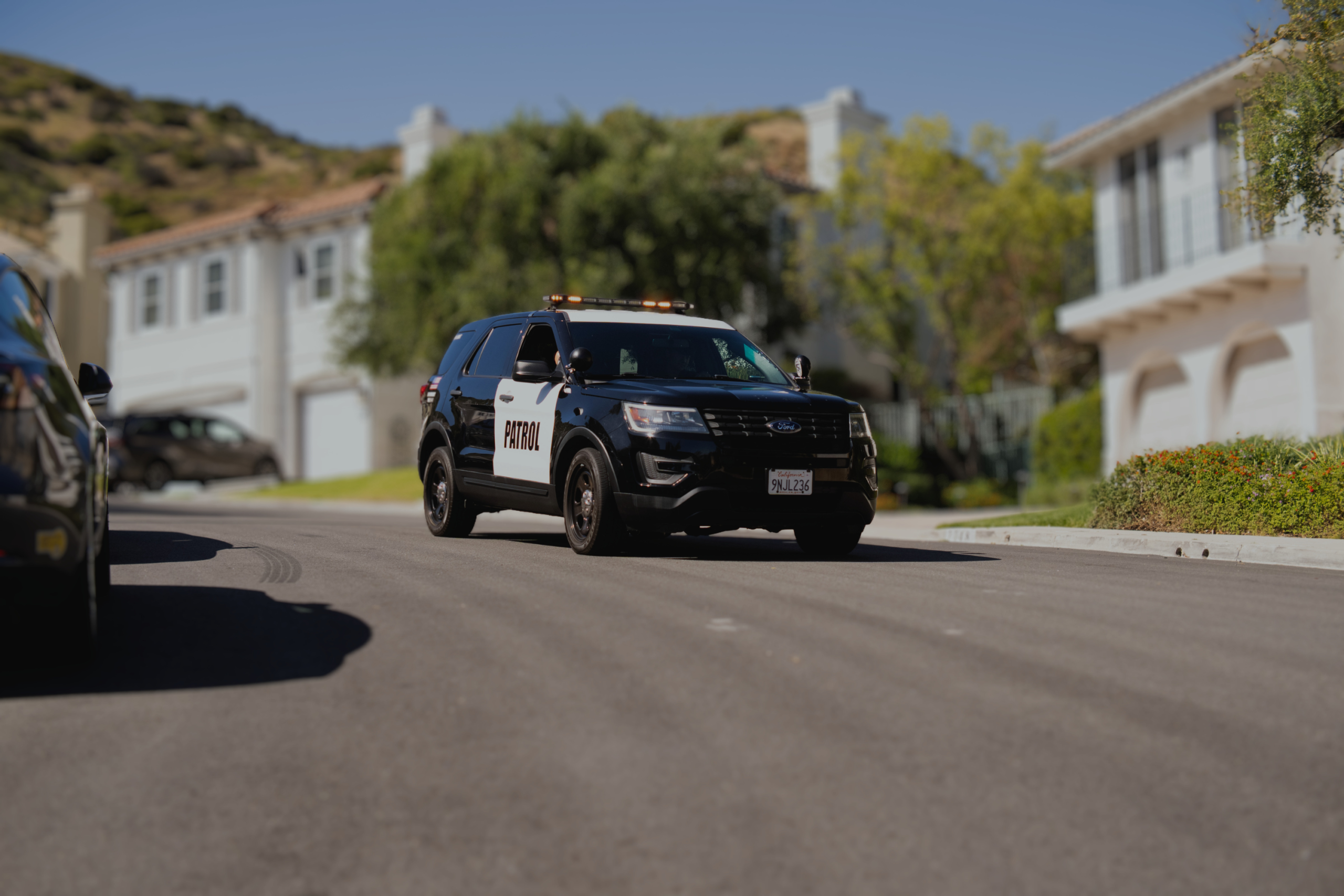
When something goes wrong on your property, you’re the one fielding the calls, insurance, tenants and sometimes even the attorneys. Property managers in California carry that risk whether they want it or not.
How security guards reduce liability for property owners in California comes down to two things we see every day. Guards lower the odds of something happening on your site. And when something does happen, they leave a paper trail that shows your property was being actively managed.
This page is for property managers, HOA boards, business owners, and facility managers. We work across Los Angeles County, Orange County, the San Fernando Valley, and Ventura County. Safeguard Security Services has run under California PPO License #122311 since 2015. Every shift gets logged in Silvertrac.
Why Property Owners in California Carry the Risk
Risk exposure isn't only about lawsuits. It shows up as climbing insurance premiums, harder underwriting at renewal, tenants who don't sign back up after an incident, and management time spent on claims and reports. Even when nothing reaches a courtroom, the cost of a poorly managed property adds up fast.
Climbing premiums
Rates that creep upward year over year.
Harder underwriting
Carriers asking more at every renewal.
Tenants leaving
Renewals that don't sign back after incidents.
Management time
Hours spent on claims, reports, callbacks.
Most property owners come to us after one of two things happens. Their insurance carrier asks for documented security. Or there was an incident on site and they don't want a repeat.
Site Conditions That Push Owners Toward Hiring Security
A few things come up over and over. A shopping center in a high-crime area where break-ins keep happening or a bar where parking lot fights have become a Friday-night problem. An apartment complex where tenants have flagged break-ins for months and the gate still doesn't work. These are the type of properties where adding guard coverage tends to pay back fast in fewer incidents, smoother insurance renewals, and tenants who actually stay. (Read more signs your property needs on-site security.)
High-crime area where break-ins keep happening.
Parking lot fights have become a Friday-night problem.
Tenants have flagged break-ins for months and the gate still doesn't work.
When Insurance Carriers Push for Security Guard Coverage
Carriers are pricing renewals on documentation and risk profile, not just past losses. Properties with licensed guards, written post orders, and timestamped patrol records are easier to underwrite. In some high-crime zip codes, carriers won't renew at all without professional security in place. We've had clients land on us specifically because their broker told them to.
What carriers underwrite on today
Written post orders and timestamped patrol records.
BSIS-licensed officers on every shift, on the record.
Some high-crime zip codes won't renew without it.
Get a real liability assessment before the next incident on your property.
We walk the site with you, review your history, and tell you straight whether guards are the right call, or whether they're not.

How Security Guards Lower Premises Liability Exposure
Here's how guards actually reduce liability for property owners in California. Four things, in rough order of impact.
Visible Deterrence and the Reasonable Care Defense
A uniformed guard at the front of a property changes who walks in. Criminals pick easier targets. Twenty years of retail loss prevention research back that up.
Visible patrols also create a record. A marked guard on site, in uniform, running a published patrol schedule is documented evidence that your property was being managed. Insurance carriers and property managers care about that.
Incident Documentation That Protects Property Owners
This is the part most security companies oversell and underdeliver. Every shift on a Safeguard contract runs through Silvertrac. Every checkpoint, every incident, every shift handoff gets GPS-timestamped and logged in real time. You can pull the reports before the guard clocks out.
If something happens on your property at 3 AM, you don't have to ask what your guards were doing. The patrol log is there. The incident report is there. When attorneys, adjusters, or your own management team ask for documentation later, it's already on file.
Access Control and Patrol Logs as Operational Records
Access control points sign people in. Patrol logs prove the guard walked the route. Together, they show your property was being managed, not just sitting open.
For an apartment complex, that means visitor screening, gate enforcement, and overnight patrols logged checkpoint by checkpoint. For a commercial property, it means after-hours access logs and tenant escort records. Each entry is another piece of documentation if questions come up later.
Faster Emergency Response Reduces Injury Severity
Risk isn't only about whether an incident happens. It's about how bad it gets before someone responds. A guard that is trained in de-escalation can break up a fight before it becomes a stabbing.
Faster response means smaller injuries. Smaller injuries mean smaller claims downstream.
The Liability You Take On When You Hire Security Guards
Hiring guards doesn't only reduce risk. The wrong contract can leave you worse off than no guard at all. We've reviewed enough competitor agreements to know exactly where the issues fall.
Liability and Negligent Hiring of Security Guards
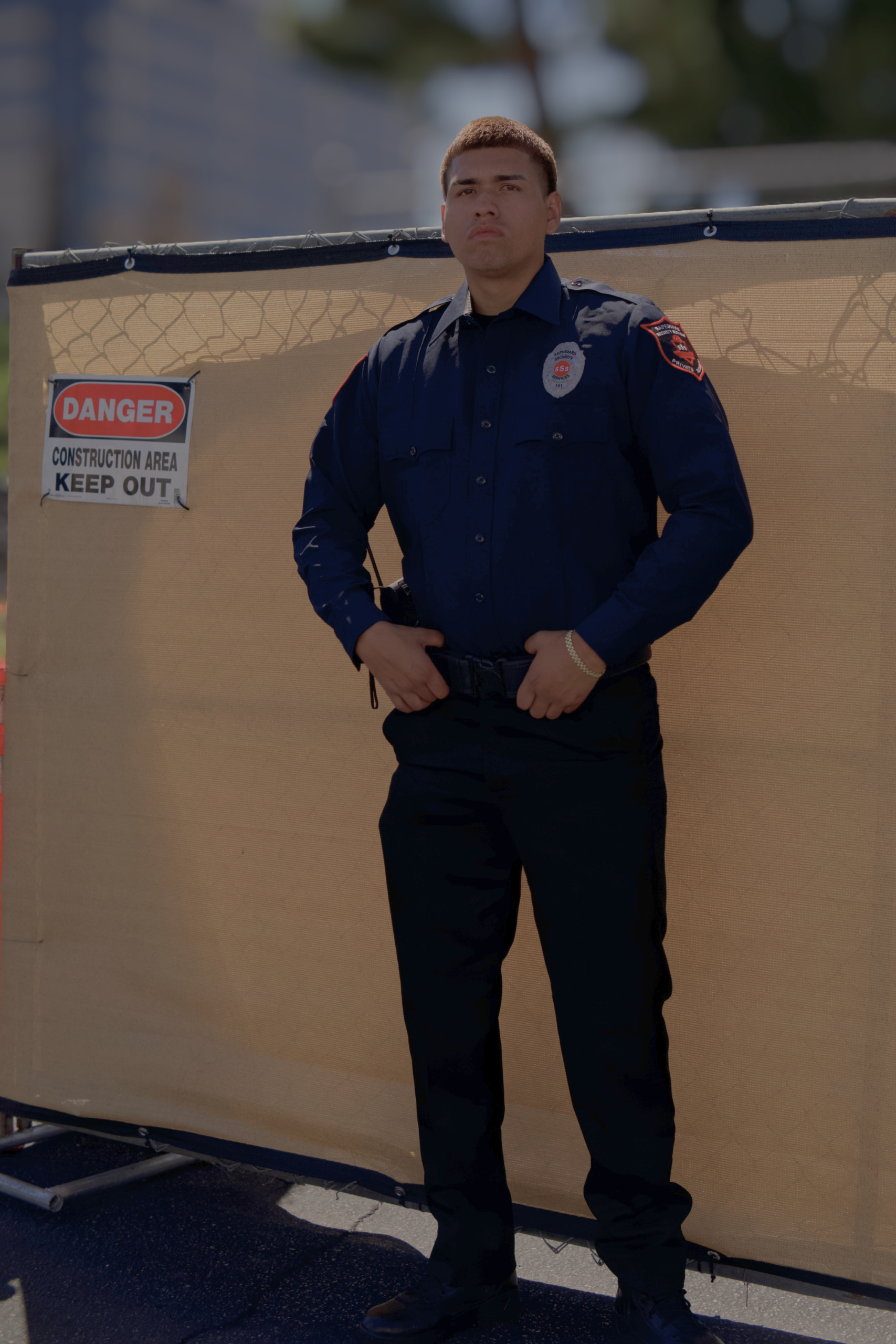
If a guard on your property does something they shouldn't, the property owner often gets named in the resulting claim. If the guard wasn't properly licensed, the picture gets worse. Hiring an unlicensed or undertrained guard is one of the easiest ways to make a bad situation harder to manage. (See our hiring standards.)
Verify PPO licensing and individual Guard Cards through search.dca.ca.gov before you sign any contract.
Excessive Force and Use-of-Force Liability Exposure
Use-of-force incidents are where security guards create the most owner exposure. A bouncer who over-restrains a patron and breaks a wrist drags the property into the resulting complaint. Patrol officers who chase a shoplifter into the parking lot can put the property on the wrong side of a false imprisonment claim. Both kinds of incidents typically involve the security company and the property owner together.
Your contract should require written use-of-force policies, documented de-escalation training, and incident reporting on every physical contact. If the company can't show you those policies, walk.
What a Liability-Reducing Security Contract Looks Like
A protective contract has specific things in it. Not vague promises. (Use these as your vetting questions before signing.)
| Requirement | What it means for your property |
|---|---|
|
BSIS Licensing, PPO Verification, and Guard Card Compliance
|
Confirm the company holds a current PPO from the California Bureau of Security and Investigative Services. Ours is PPO #122311, verifiable at search.dca.ca.gov in under a minute. Every guard on your property should hold a valid Guard Card. Any armed guard needs a current Exposed Firearm Permit on top of that. If the company can't provide those documents on request, they're a risk to your property, not a service. |
|
Insurances to Carey (General Liability Insurance and Workers' Comp).
|
Ask for a certificate of insurance before anything is signed. Industry standard is at least $1 million per occurrence and $2 million aggregate in general liability. Workers' comp coverage is standard across the board for security companies with employees. |
Comparing security contracts right now? Walk your property with us first, free, no obligation.
Get a WalkthroughWhen Security Guards Reduce Liability vs When They Increase It
Guards aren't the right answer for every property. A small office with daytime traffic and no incident history doesn't need 24/7 coverage. Cameras and access control may be enough.
Armed vs Unarmed Security Guard Liability Comparison
Higher reward, higher exposure
Armed guards reduce certain risks and raise others. They make sense at cash-heavy properties, high-value asset facilities, and sites with active threats. They're overkill at most residential and standard retail locations. Armed guard insurance costs more, and use-of-force exposure runs higher.
Lower-risk default
If you don't have a clear reason to deploy armed security, unarmed is the lower-risk choice. (See our armed vs unarmed decision guide.)
Property Types Where Guards Most Reduce Liability
Apartment complexes that see overnight incidents are the obvious case. So are HOAs with amenity areas that stay open after dark. Same for shopping centers where parking lot crime keeps reappearing and construction sites losing material to theft. Hotels, medical offices, and banks land in the same category for different reasons: public lobbies, controlled substances, and customer-facing cash risk.
Apartment Complexes
HOAs
Shopping Centers
Construction Sites
Hotels
Medical Offices
Banks
24/7 Sites
For these property types, professional security does more to lower risk exposure than anything else you can put on a property.
If guards aren't the right call for your property, we'll tell you.
We don't push contracts on properties that don't need one. Walk the site with us and get a straight answer on what would actually lower your exposure.
What Our Clients Say
Rated Excellent on Google
"Professional team that takes security seriously. Response times excellent, communication top notch."
"Best security company in the area. They go above and beyond what's expected. Highly recommend."
"Outstanding service. Guards well-trained, attentive, truly care about the properties they protect."
"Excellent service from day one. Our property is secure and we have complete peace of mind."
"Safeguard Security has amazing service. Guards are polite, productive, efficient and trustworthy."
"Great service and great pricing. Very professional! Glad we chose to partner with SafeGuard."
"Pleasure to work with Safeguard. Reliable, professional, great rates, always on time."
"Nicest people to work with. Owners very professional, genuinely cared to help. Worth the peace of mind."
Areas we serve
We work across Los Angeles County, Orange County, the San Fernando Valley, and Ventura County, with locally based supervisors and dispatch. Every shift logged in Silvertrac, every officer BSIS licensed.
Los Angeles County
Orange County
San Fernando Valley
Ventura County
Get a Real Liability Assessment for Your Property
If you want to know whether guards would actually lower your risk exposure, walk the site with us. We don't push contracts on properties that don't need one. If guards aren't the right call, we'll tell you that and recommend what is. (Why work with Safeguard.)
Call (877) 766-5499. Email info@safeguardpss.com. Or book a free site walkthrough.
PPO License #122311. Licensed by the California Bureau of Security and Investigative Services. In business since 2015.
Every shift backed by three layers of accountability: GPS-verified Silvertrac reporting, 24/7 dispatch monitoring, and unannounced field supervisor checks.
GPS-Verified Silvertrac
Every checkpoint, every incident, timestamped in real time.
24/7 Dispatch Monitoring
Local team watching reports as they come in, around the clock.
Field Supervisor Checks
Unannounced site visits to make sure posts are being worked.