California Private Security Regulations: A Buyer's Guide to BSIS Licensing & Compliance
START SECURITY SERVICES TODAY
Most clients don’t realize a security company isn’t compliant until something goes wrong. A guard without guard card, the company without insurance, or an armed guard without their firearms permit. By the time the client finds out, an incident has already happened.
California private security regulations exist to prevent that. The Bureau of Security and Investigative Services (BSIS) licenses every guard, patrol operator, and proprietary security employer in this state. If you’re hiring security in California, BSIS rules decide who can stand a post, who can carry a firearm, and who can contract their services to you. This page walks through what to verify before you sign.
Safeguard is licensed and insured under California PPO License #122311, which you can check at search.dca.ca.gov. Every officer we deploy carries an active guard card, current Live Scan clearance, and a valid BSIS firearms permit if they're armed. Our three layers of accountability document that on every shift.
What the BSIS Regulates in California's Private Security Industry
BSIS sits under the California Department of Consumer Affairs. It licenses and disciplines five private security categories: private patrol operators, proprietary security employers, alarm companies, private investigators, and locksmiths. The Private Security Services Act (BPC §7580 et seq.) and the Proprietary Security Officer Act cover guard work specifically.
So anyone supplying contracted security in California needs a PPO license. Anyone working as a contract guard needs a BSIS guard card. Anyone working in-house security needs either a guard card or a PSO registration, depending on employer type. No exceptions and no shortcuts.
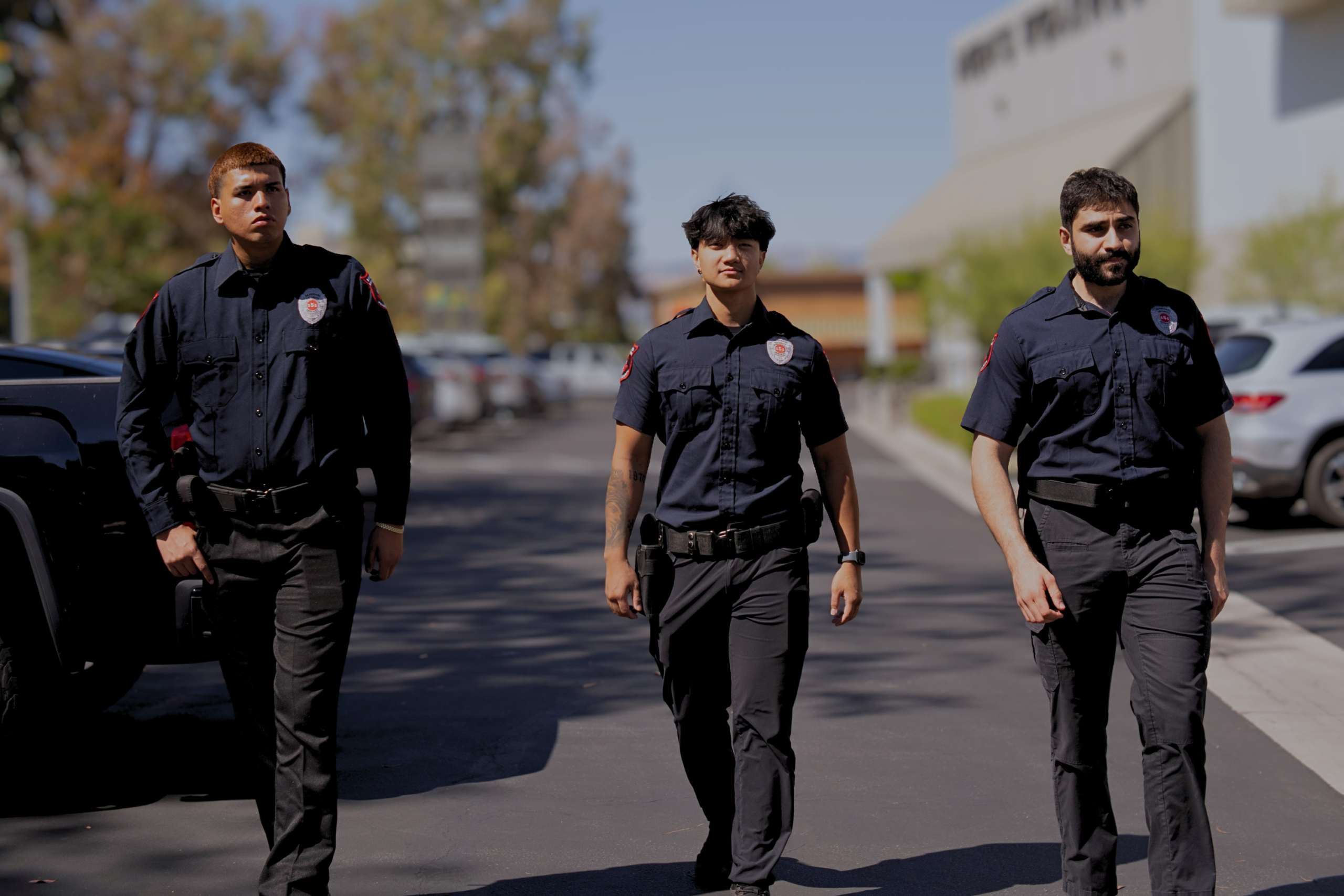 On PostBSIS-licensed officers
License Types Issued by BSIS (PPO, PSE, Guard Card, PSO, Firearms Permit)
Five license categories matter for you as a buyer. The PPO is the company license for contracted guard services. The PSE registration is the employer permit for in-house security only. The guard card registers individual contract officers. The PSO card registers in-house officers. The firearms permit authorizes carry of an exposed weapon, separate from any base registration.
Private Patrol Operator
Company license for contracted guard services.
Proprietary Security Employer
Employer permit for in-house security only.
Individual Registration
Registers individual contract officers.
Proprietary Officer
Registers in-house officers.
Permit
Authorizes carry of an exposed weapon, separate from any base registration.
Who Is Required to Be Licensed Under California Law
If a person protects your property, prevents theft, or controls access, they need a BSIS registration. Their employer holds either a PPO license to contract out or a PSE registration to staff in-house only. Mixing the two breaks BPC §7582.3.
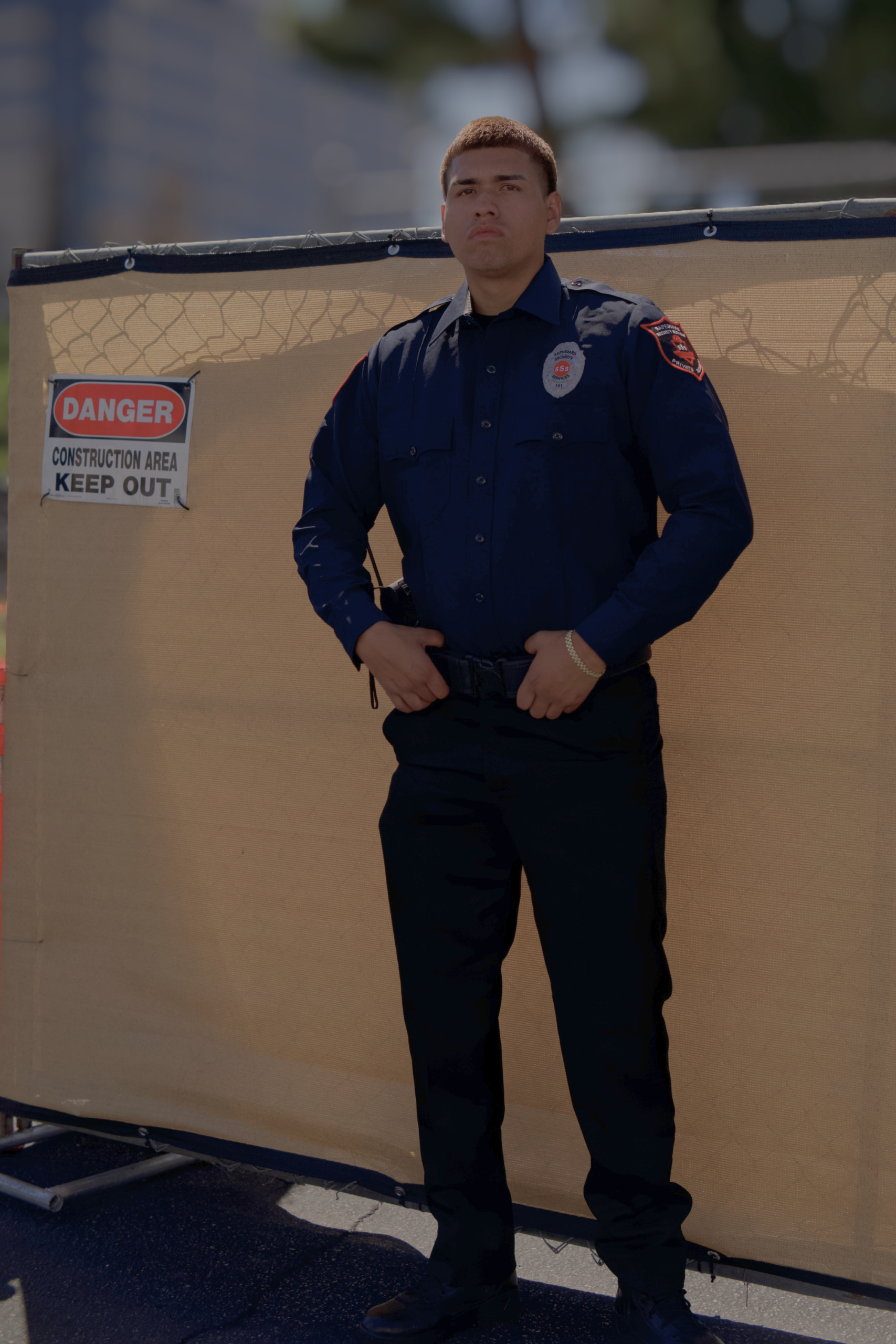
BSIS rules decide who can stand a post, who can carry a firearm, and who can contract their services to you.
This page walks through what to verify before you sign.
PPO vs PSE: Choosing Between a Contracted Security Company and In-House Officers
A Private Patrol Operator (PPO) is a licensed company that contracts security guards to other businesses. A Proprietary Security Employer (PSE) is a business that employs unarmed officers only for its own location. PSEs cannot loan or contract out their officers. That’s a PPO function only.
For most property managers, HOAs, banks, medical offices, and event planners, hiring a PPO is the right call. The PPO carries the liability insurance, runs supervision, handles licensing renewals, and absorbs employment risk. A PSE setup only makes sense when security is incidental to your primary business and stays on your own site.
Private Patrol Operator
A licensed company that contracts security guards to other businesses.
- Carries $1M+ liability insurance
- Runs supervision & renewals
- Absorbs employment risk
- Armed + unarmed options
Proprietary Security Employer
A business that employs unarmed officers only for its own location.
- Cannot loan or contract out officers
- No firearms permitted
- In-house at one site only
- Use when security is incidental
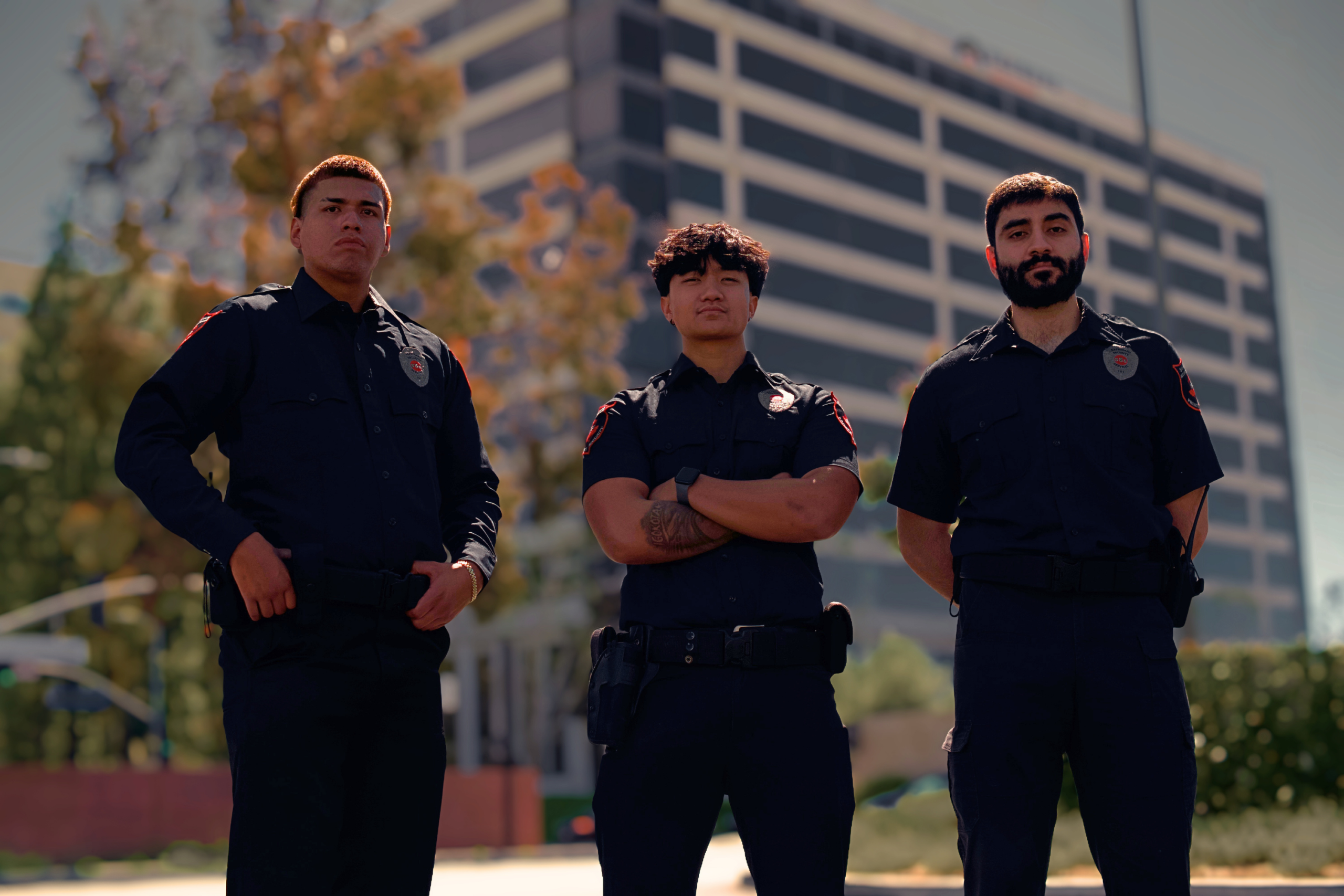 Guard CardVerified on every shift
Guard Card vs PSO License: What the Officers on Your Site Should Carry
A contract guard working at your property must hold an active BSIS guard card. A PSO card means the officer is in-house at one employer. They can’t legally work your site through a third party. If a contractor sends a PSO-only officer, that’s a compliance flag.
PSOs also can’t carry firearms in California, regardless of training. If you need armed coverage, the officer must hold a guard card plus a firearms permit. Confirm both before the first shift.
When to Hire a Licensed PPO Instead of Using Your Own Staff
Hire a PPO when you need flexible coverage, armed and unarmed options, or any rotation across sites. A PPO carries the $1,000,000 general liability minimum, runs background screening, and handles training records. Unlicensed or borderline setups push that risk straight to you.
Armed vs Unarmed Security Guards in California: Legal & Operational Differences
Unarmed officers need a guard card, 40 hours of BSIS training (8 hours before registration plus 32 hours within six months), and 8 hours of continuing education a year. Armed officers need all of the above plus a BSIS firearms permit and yearly qualification on every caliber they carry.
The legal difference matters because liability follows the wrong call. Posting armed officers where the threat doesn’t justify it raises insurance exposure. Posting unarmed officers where armed presence was warranted creates a different problem after an incident. We help you match the post to the actual risk. If armed is overkill, we’ll say so.
| Requirement | Unarmed Officer | Armed Officer |
|---|---|---|
| BSIS Guard Card | Required | Required |
| BSIS Training Hours | 40 hours total | 40 hours + 14 hour firearms course |
| Pre-Registration Course | 8 hours before registration | 8 hours before registration |
| Skills Training | 32 hours within six months | 32 hours within six months |
| Continuing Education | 8 hours a year | 8 hours a year |
| BSIS Firearms Permit | Not required | Required |
| Yearly Caliber Qualification | Not required | On every caliber carried |
BSIS Firearms Permit Requirements for Armed Officers
A firearms permit takes 14 hours of approved training: 8 in classroom, 6 on the range. The permit is good for two years, but the officer has to requalify on every caliber once a year. Permits are caliber-specific. An officer permitted on a 9mm cannot carry a .40 without adding that caliber to the permit.
When You Actually Need Armed Security (and When You Don't)
Armed makes sense for cash-handling, high-value retail, executive protection, and certain construction or industrial sites with a documented threat history. Most residential, HOA, and office posts need consistent unarmed coverage with strong supervision instead. We’ll tell you straight which one your site calls for.
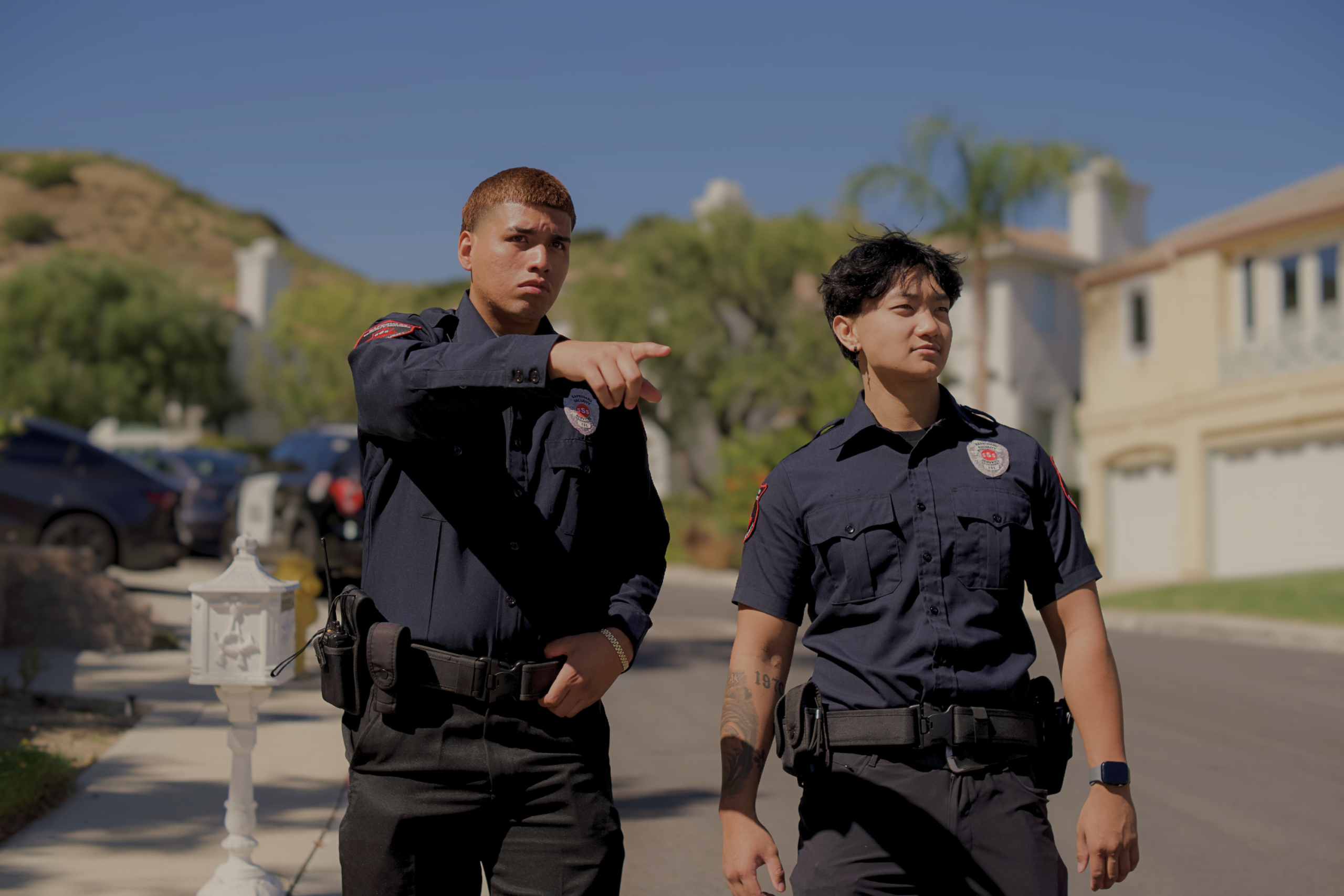 $1M MinActive liability coverage
Insurance, Bond & Training Requirements Every Licensed California Security Company Must Meet
Every PPO has to carry commercial general liability insurance with a $1,000,000 per-occurrence minimum (BPC §7583.40, set by AB 2220 in 2015). Coverage has to stay active for the life of the license. A lapse, even a short one, is grounds for BSIS suspension. Ask for the certificate of insurance, not a promise.
PPOs also file a surety bond. The bond protects clients if the operator commits fraud or breaches contract obligations. Both insurance and bond have to be in good standing for the license to be active.
California Security Guard Training Hours & Mandatory Courses
Officers complete 8 hours of mandatory training before registration: Powers to Arrest and Appropriate Use of Force. Within six months they finish another 32 hours of skills training covering communication, observation, terrorism awareness, weapons of mass destruction awareness, and post-specific topics. Annual continuing education is 8 hours minimum.
Before Registration
Powers to Arrest & Appropriate Use of Force
Pre-RegistrationWithin Six Months
Skills training: communication, observation, terrorism & WMD awareness, post-specific topics
Skills ModuleEvery Year After
Continuing education to maintain registration
Annual CEUnder SB 652, the 8-hour pre-registration course (effective 2026) has to be done within six months before the application and from a single BSIS-approved school. Old certificates from earlier years don’t count anymore.
Background Checks, Live Scan & Continuing Education Rules
Every applicant submits Live Scan fingerprints to the California DOJ and the FBI. Disqualifying convictions block registration. The check repeats at renewal. At Safeguard we re-clear Live Scan and update training records before every two-year renewal. We don’t deploy expired credentials.
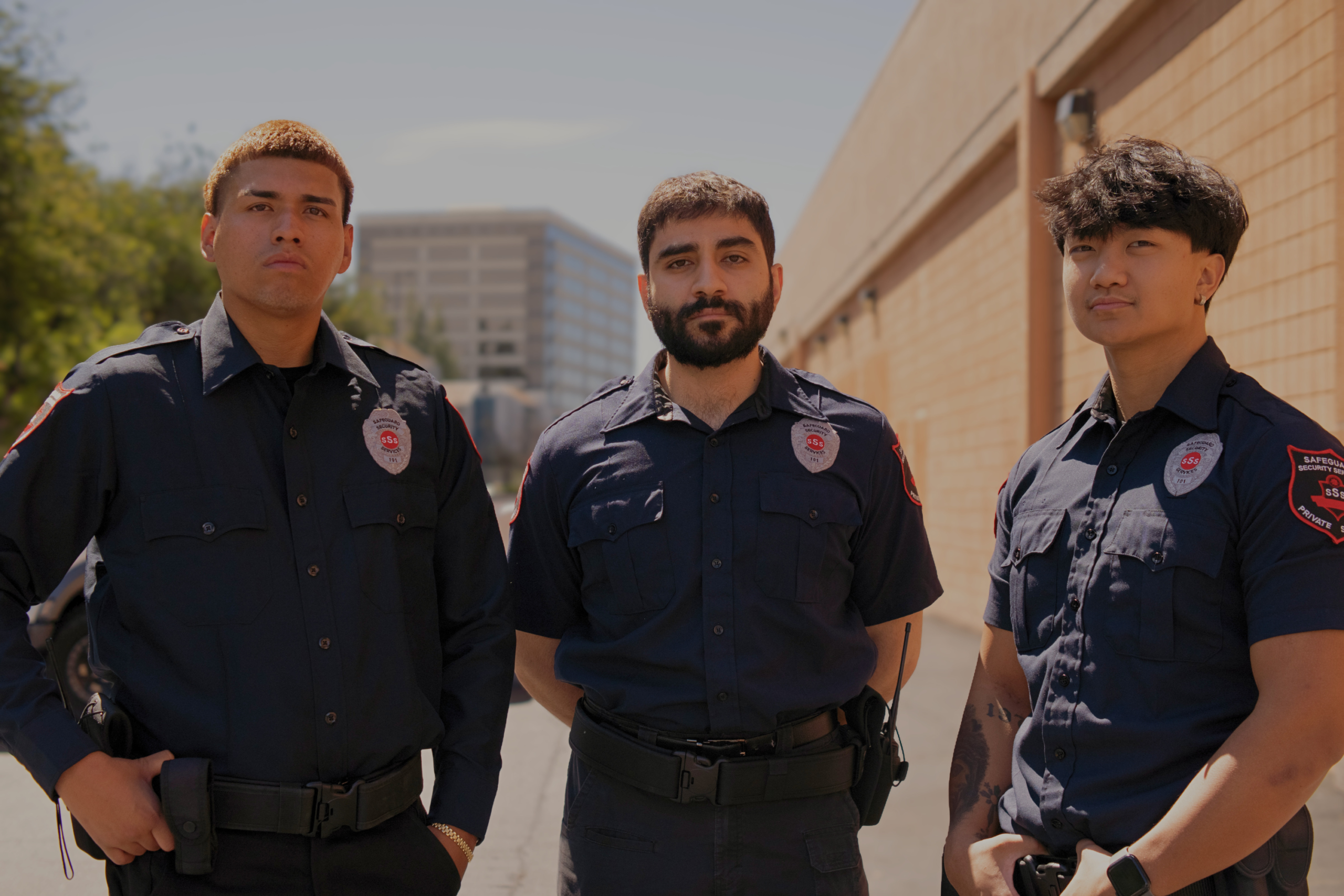
We don't cut corners, and we don't guess.
We'll check your current vendor's BSIS status with you on the call, no obligation. If your existing coverage checks out, we'll tell you that.
How to Verify a Security Company's BSIS License Before You Hire
Go to search.dca.ca.gov. Type in the PPO number or company name. You’ll see license status (active, expired, suspended, or revoked), issue date, and any enforcement actions on file. Active status, no actions, current insurance: that’s the floor.
If a guard company can’t give you their PPO number on the spot, walk away. If the public record shows pending discipline, ask for context before you sign. Vague answers here are the entire warning sign.
Visit search.dca.ca.gov
The public BSIS license search portal.
Type PPO Number or Name
If they can't give it on the spot, walk away.
Confirm Active Status
Active, no actions, current insurance — the floor.
Review Discipline Record
Pending discipline? Ask for context before signing.
Red Flags of an Unlicensed or Non-Compliant Security Provider
Quoted price 30%+ below market. No certificate of insurance when you ask for one. Officers without visible registration cards. Hazy answers about training hours. A PSE license being marketed as if it covers contract work. Any of these means the risk is moving to you.
Quoted price 30%+ below market.
No certificate of insurance when you ask for one.
Officers without visible registration cards.
Hazy answers about training hours.
A PSE license marketed as if it covers contract work.
Documents to Request Before Signing a Security Contract in California
Ask for the PPO license number, a current certificate of liability insurance ($1M minimum), workers’ compensation certificate, copies of each assigned officer’s guard card (firearms permit too if armed), and a sample post orders document. If they balk at any of these, that’s your answer.
Why Safeguard Operates Differently
A lot of companies tell you they’re compliant. We document it every shift. Our three layers of accountability are GPS-verified Silvertrac reporting with timestamped checkpoint logs, live 24/7 dispatch that calls an officer within 15 minutes of a missed scan, and unannounced field supervisor visits. That produces an audit trail showing the licensed officer was actually on post, not just on the schedule. Learn how our accountability system works.
GPS-Verified Silvertrac Reporting
Timestamped checkpoint logs on every patrol.
Live 24/7 Dispatch
Calls an officer within 15 minutes of a missed scan.
Field Supervisor Visits
Unannounced, on-site, audit-grade documentation.
Before every shift, we re-check each assigned officer’s BSIS registration against the public DCA database. If a guard card lapsed or a firearms permit is in its renewal window, that officer doesn’t deploy. A lot of providers verify at hire and forget. That’s where compliance breaks.
Safeguard has operated in California since 2015 under PPO License #122311. Our liability coverage runs above the state minimum. Insurance certificate, bond status, and license history are all current and available when you ask. We also offer a 30-day trial so you can see how we work before you commit long-term. We don’t cut corners, and we don’t guess.
Talk to a Compliance-First Security Operator
Call (877) 766-5499, email us, or reach out for a free site walkthrough. We’ll check your current vendor’s BSIS status with you on the call, no obligation. If your existing coverage checks out, we’ll tell you that.