START SECURITY SERVICES TODAY
The First 60 Seconds
A guard who doesn’t know how to react when the fire alarm goes off isn’t doing you much good. The hard part of work is not showing up, it’s knowing exactly what to do in the first 60 seconds when something breaks. The entire point of security is proper responses to different situations. Whether it’s a fire alarm, break-in, aggressive employee, or trespassers, there should be procedures in place letting guard know how to handle the situation. How guards handle these situations makes a world of differences in the quality of the service.
Whether your building needs security after midnight, or the loading dock was left unsupervised, the tenants not following parking and HOA rules or the event attracts uninvited guests and visitors, you need a guard who understands exactly how to react to every situation. If a guard is already on your site and you couldn’t say what they’d do in a real crisis, this page is for you.
The Basics
What Are Security Guard Response Procedures?
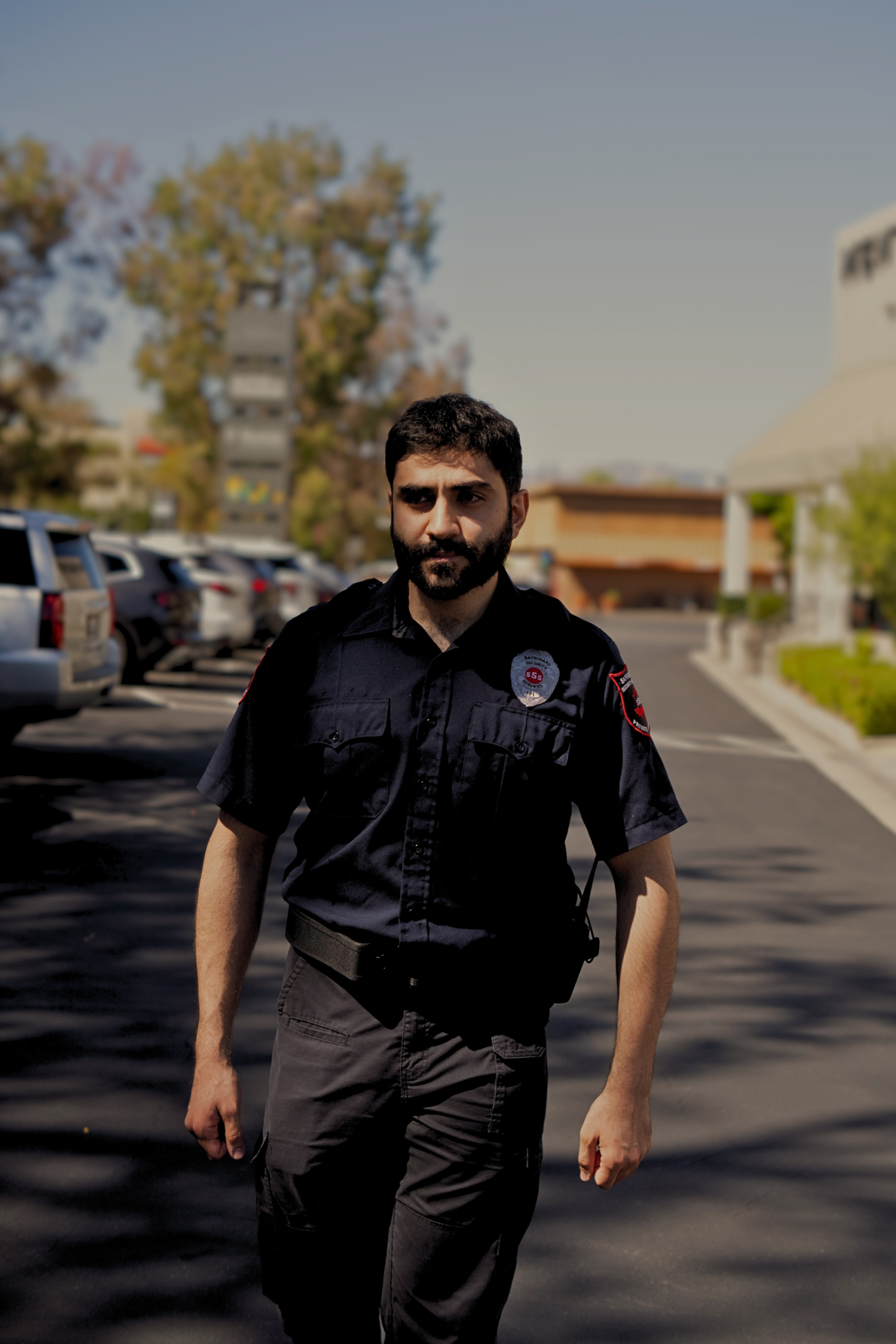
Security guard response procedures are the written rules your officer follows when an incident hits. They sit inside the post orders for your site, the document that tells a guard what to do, who to call, and when to back off. We do this to take guessing off the table because the wrong decision can turn very expensive.
A generic binder doesn't cut it. We write your post orders around your actual property, your entry points, and the risks that are specific to you. A bank branch and a fenced construction yard don't get the same playbook, because they don't face the same threats.
Emergency Response
The 5 Steps of an Emergency Response
Almost every response runs through five moves: read the situation, lock down the area, get on the radio with dispatch and 911, do only what training covers, then write it all down. The order matters. Officers who improvise, or who skip the report, are how a routine call can become an injury or a court case.
Read the situation
Lock down the area
Get on the radio with dispatch and 911
Do only what training covers
Write it all down
Why It Matters
Why Response Procedures Matter
Good intentions don’t hold up in court. An officer who guesses puts the liability on you, not just on themselves. A guard’s real job in an emergency is easy to say and hard to do: move fast, and stay inside what the law actually allows. Written procedures are what make that possible when everything is going sideways.
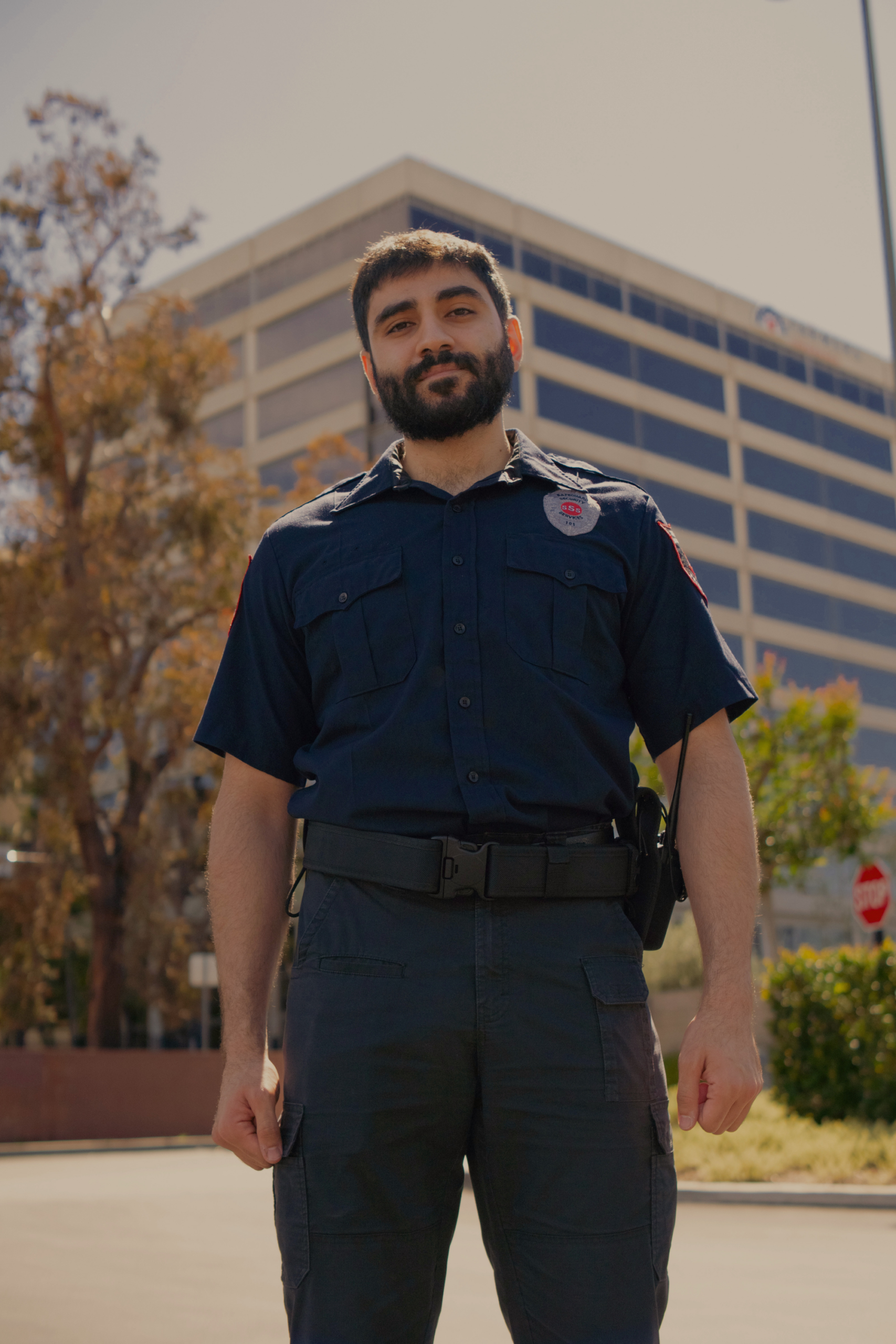
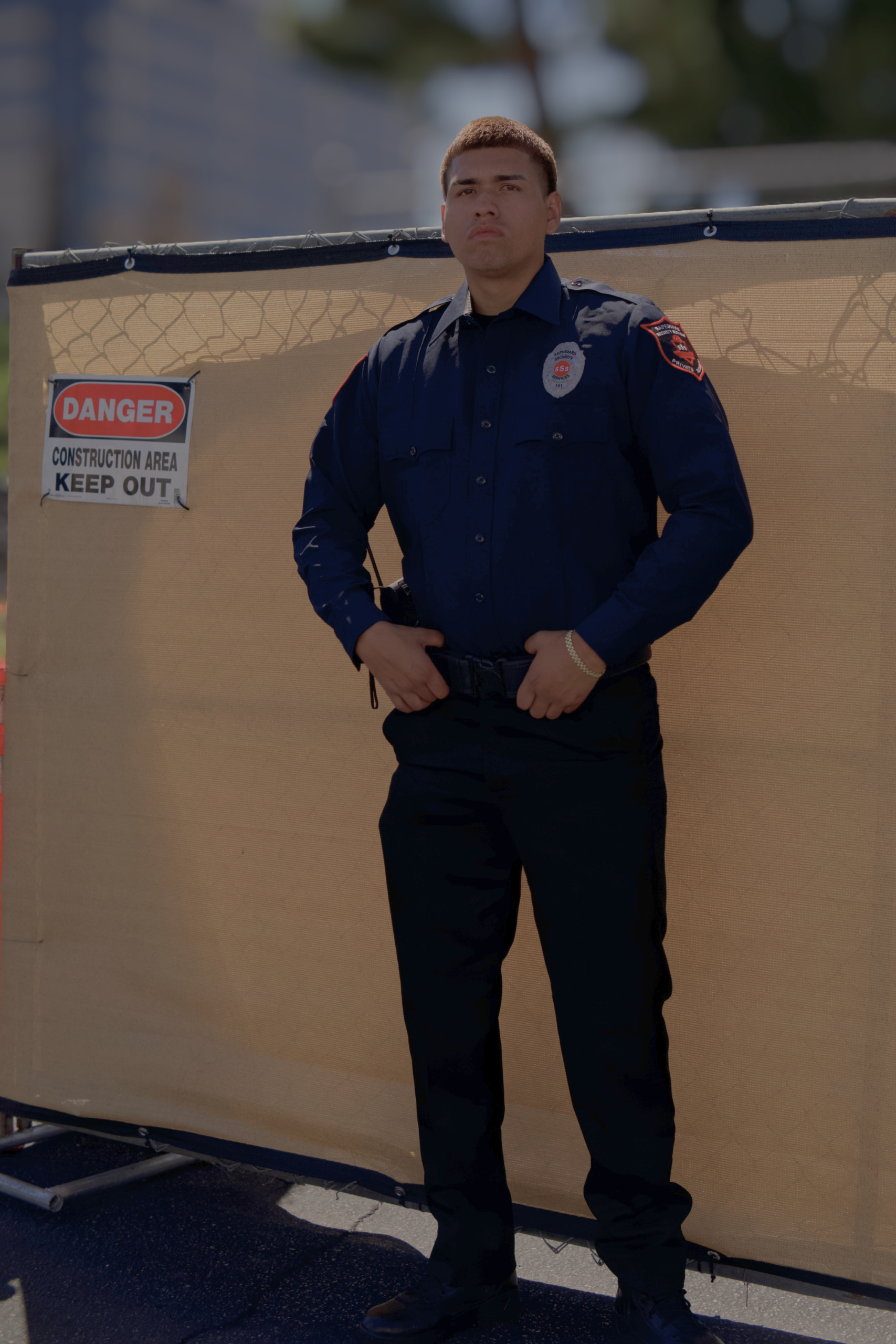
Procedures written for your property — not a generic binder.
We map the risks, write post orders for your site, and put real response procedures behind every shift.
By Emergency Type
How a Guard Should Respond to Each Type of Emergency
What your officer should do changes with the emergency in front of them. A grease fire, a heart attack, and an active shooter call for three different responses, and a guard who treats them the same gets people hurt. Here’s the short version for the calls that come up most.
Fire Emergencies and Evacuation
First move is the alarm and a 911 call. From there the officer walks people to the exits along the routes we mapped ahead of time, sweeps the restrooms and back offices for anyone left behind, then meets the fire crew and points them straight at the source. None of that works cold. Ours learn the building before they start a shift.
Medical Emergencies (First Aid, CPR, AED)
A guard with current first aid, CPR, and AED training can keep someone breathing until paramedics arrive. Call 911, check the airway and pulse, work only inside what the certification covers. California's Good Samaritan law backs reasonable help, but it won't cover a guard who decides to play doctor. Our guards follow the law. Even with the right intentions, a guard trying to treat someone beyond their training can turn a medical emergency into a serious liability issue.
Alarm Response
Not every alarm means run toward it. A burglary alarm means call the police and watch from somewhere safe, not play hero. A fire alarm means to get people out. An intrusion alarm during a patrol is its own case: the officer checks the cause, logs what they find, and clears it as a false alarm if that's all it was. Either way, dispatch hears about it before the officer moves. Sending one guard alone at an unknown noise is how guards get hurt.
Active Shooter and Shelter in Place
Run, hide, fight, in that order. The officer pushes people away from the threat, locks down the spots they can't get out of, and calls 911 with a location and a description. When leaving is more dangerous than staying, like a chemical release nearby, they shelter people in place instead. The decision follows your site's lockdown plan, not whatever the officer guesses in the moment.
Judgment Call
When Should a Guard Act vs. Call the Police?
Knowing when to stand down matters as much as knowing when to step in. A guard who oversteps usually creates a worse problem than the one they walked into. Owners ask us the same thing constantly: when should a security guard call the police? Early. The second a crime is actually in progress, or the second a problem needs more than a firm "you need to leave."
California Law
What Security Guards Can and Can't Do in California
In California a guard is a private citizen with a patch, not a cop. They can watch, document, and tell someone to leave. They can make a citizen’s arrest, but only inside narrow rules. What they can’t do is tackle a shoplifter on the way out or lead with force. Business and Professions Code 7582.1 draws those lines, and we train to them. (Link: California use of force guide.)
| What a guard CAN do | What a guard CAN'T do |
|---|---|
Watch and document Tell someone to leave Make a citizen's arrest, but only inside narrow rules | Tackle a shoplifter on the way out Lead with force |
On Scene First
Are Security Guards First Responders?
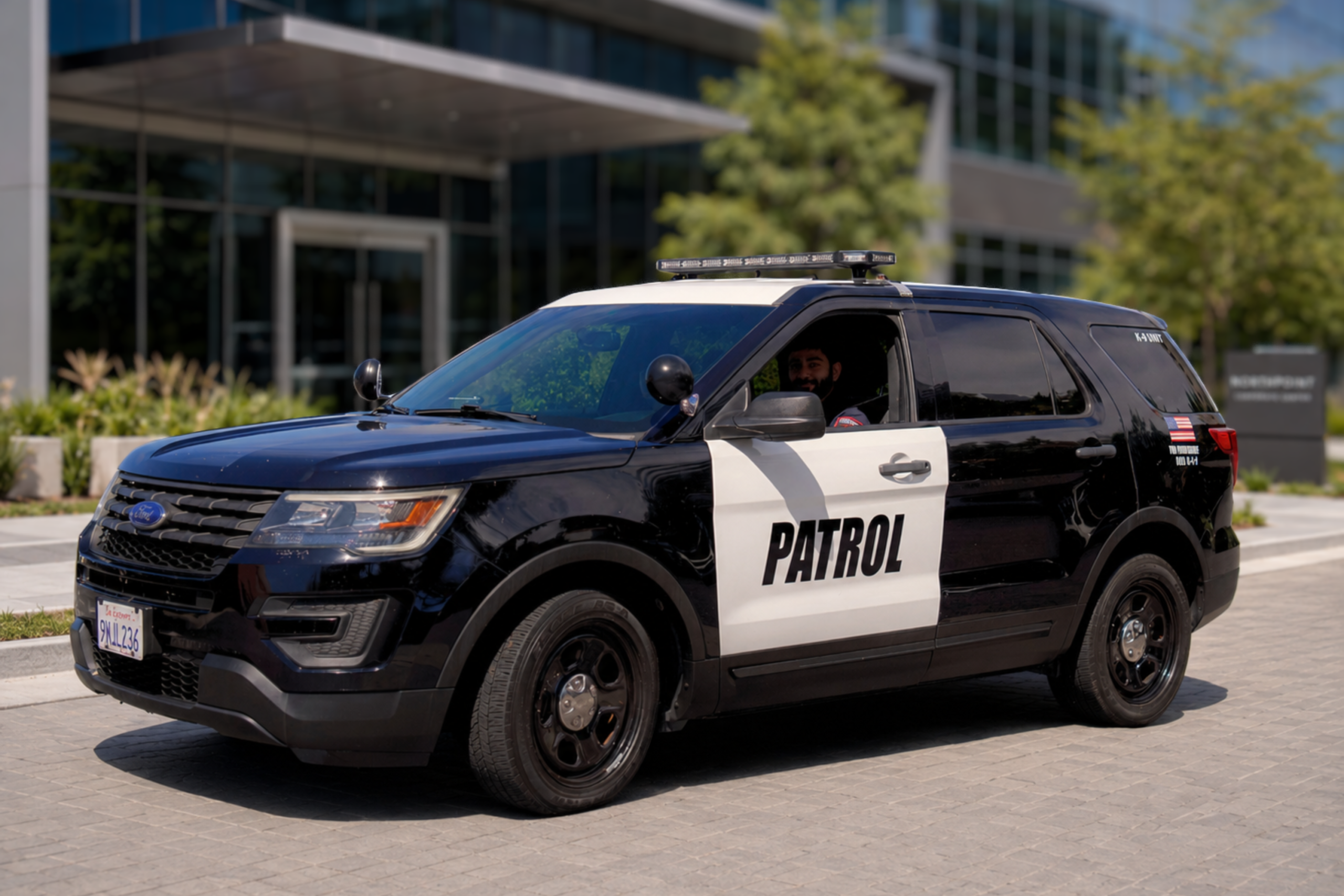
On paper, no. In practice, almost always. Your officer is usually standing there before police or paramedics, which makes them the first responder whether the title fits or not. But first on scene isn’t the same as peace officer. The job is to de-escalate the situation, report it straight, and hand off clean, with the access points and building details the responders need before they have to ask.
Can your provider prove the rounds got done?
GPS-verified Silvertrac reporting and 24/7 dispatch. Every checkpoint timestamped, every late report a phone call.
Vetting a Provider
How to Evaluate a Security Company's Response Procedures
Saying you have procedures costs nothing. Showing them is the part most companies can’t do. Before you sign anything, push on these two things.
Reporting and Accountability
Ask how they prove a guard actually did the rounds. We run GPS-verified Silvertrac reporting, so every checkpoint lands with a timestamp and the officer's ID attached, and you can pull the report up before the shift even ends. California also makes us report any guard altercation to BSIS within seven days. We don't wait the week. Incidents get logged the day they happen. (Link: incident report requirements.)
Response Time and 24/7 Dispatch
None of this matters if nobody's awake to watch it. Our dispatch runs around the clock. If a 2 AM checkpoint report hasn't come through by 2:15, dispatch is already calling the officer to find out why. We watch that window on purpose. The Silvertrac history shows most missed checkpoints fall between 2 and 5 AM, when a single overnight guard is fighting to stay sharp. So that's when a supervisor is most likely to roll up unannounced.
Safeguard Security Services has worked Southern California since 2015. We're licensed through BSIS under PPO #122311, which anyone can check at search.dca.ca.gov, and we carry insurance. Our guards train past the state minimum in de-escalation, report writing, and emergency response.
Want to know what real response procedures would look like on your property? Call (877) 766-5499 or email info@safeguardpss.com and we’ll set up a free site walk. We map the risks, write post orders for your site, and you can start on a 30-day trial. No long contracts.